How to Become a Software Developer in 2026: Complete Roadmap for Beginners
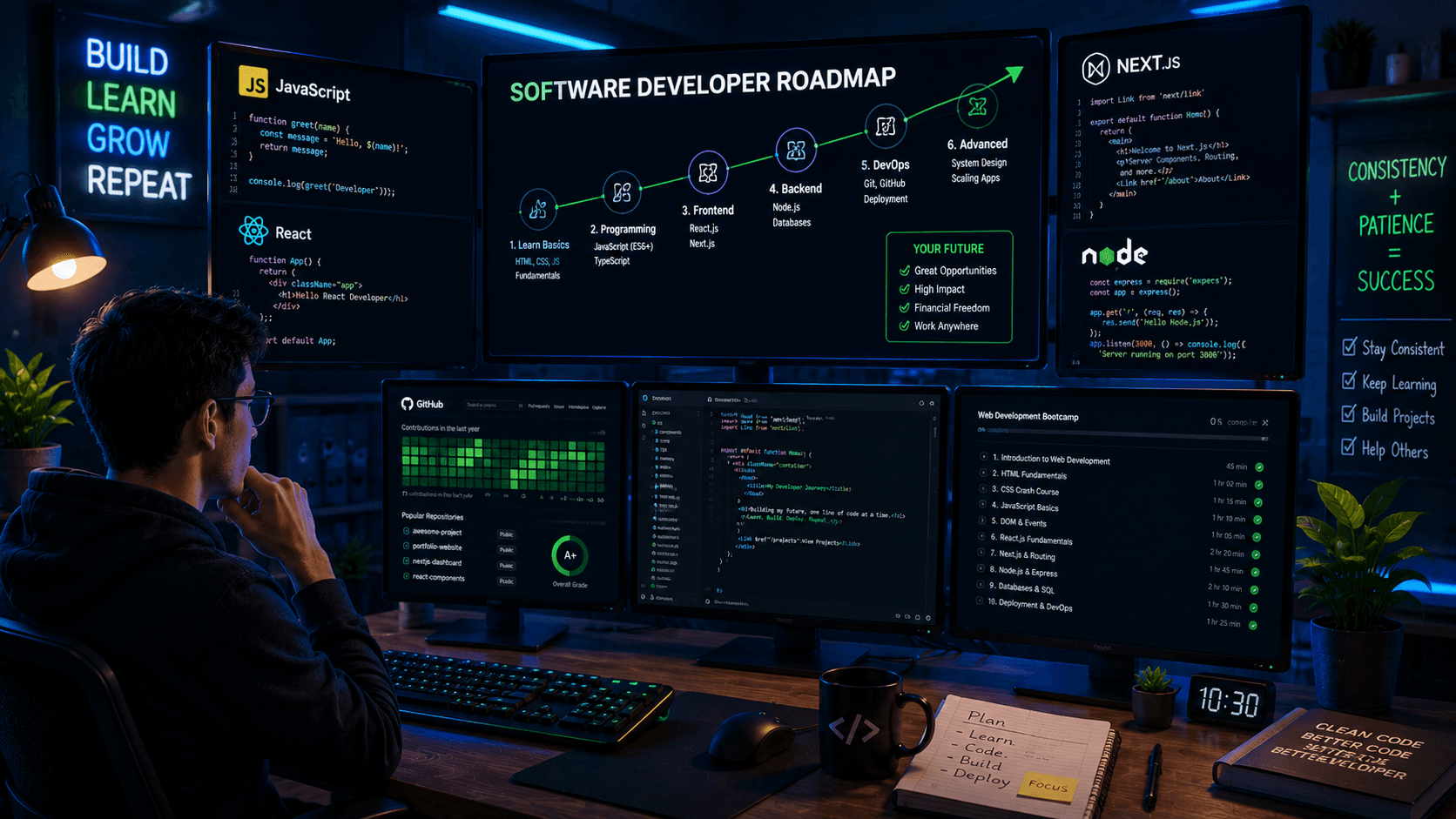
Want to become a software developer? This step-by-step roadmap covers programming languages, frameworks, projects, portfolios, and job search strategies for beginners.
Software development remains one of the most rewarding and in-demand careers in the world.
From startups and tech companies to banks, healthcare providers, and e-commerce businesses, organizations of all sizes rely on software developers to build digital products and solve complex problems.
If you're wondering how to become a software developer in 2026, you're not alone.
The good news is that you don't need a computer science degree to start a successful development career. Many professional developers are self-taught and built their skills through online learning, personal projects, and practical experience.
In this guide, you'll learn a proven roadmap for becoming a software developer, regardless of your background.
What Does a Software Developer Do?
Software developers design, build, test, and maintain applications.
Examples include:
- Websites
- Mobile apps
- Desktop software
- APIs
- Cloud services
- Enterprise systems
Developers use programming languages and frameworks to turn ideas into working products.
Why Software Development Is Still a Great Career
Despite rapid advances in AI, software developers remain essential.
Companies still need people who can:
- Design systems
- Solve business problems
- Build applications
- Review code
- Maintain software
AI tools increase productivity, but they do not replace skilled developers.
Benefits of software development include:
- High salaries
- Remote work opportunities
- Strong job demand
- Flexible career paths
- Continuous learning
Step 1: Learn Programming Fundamentals
Before learning frameworks or tools, focus on programming fundamentals.
Key concepts include:
- Variables
- Functions
- Loops
- Arrays
- Objects
- Conditionals
Understanding these concepts makes learning any programming language easier.
Step 2: Choose Your First Programming Language
Many beginners struggle with this decision.
For most people, the best options are:
JavaScript
Best for:
- Web development
- Frontend development
- Full-stack development
Python
Best for:
- Automation
- AI
- Data science
For a detailed comparison of modern languages, read:
Best Programming Languages to Learn in 2026
Step 3: Learn Version Control
Git is one of the most important tools every developer should learn.
Git helps you:
- Track changes
- Collaborate with teams
- Manage projects
- Deploy applications
Important Git concepts:
- Repositories
- Branches
- Commits
- Pull Requests
Step 4: Learn Web Development
Even if you don't plan to become a web developer, understanding web technologies is valuable.
Start with:
HTML
Provides structure.
CSS
Controls styling and layouts.
JavaScript
Adds interactivity.
Together, these technologies form the foundation of modern web development.
Step 5: Learn a Modern Framework
Once you're comfortable with JavaScript, learn a framework.
Popular options include:
- React
- Next.js
- Vue
- Angular
React remains one of the most popular choices among employers.
Step 6: Build Real Projects
Projects are more important than certificates.
Examples include:
- Portfolio websites
- Blog applications
- Task managers
- E-commerce stores
- Chat applications
Projects demonstrate practical skills to employers.
Step 7: Learn Databases
Most applications need data storage.
Popular databases include:
SQL Databases
- PostgreSQL
- MySQL
NoSQL Databases
- MongoDB
- Firebase
Understanding databases is essential for full-stack development.
Step 8: Build a Portfolio
A portfolio allows employers to evaluate your work.
Include:
- Personal projects
- GitHub repositories
- Technical skills
- Contact information
Your portfolio should showcase your strongest projects.
Step 9: Learn TypeScript
TypeScript has become increasingly important in professional development.
Benefits include:
- Better maintainability
- Type safety
- Improved tooling
Read:
JavaScript vs TypeScript: Which Should Developers Learn?
Step 10: Apply for Jobs
Many developers wait too long before applying.
Start applying when you can:
- Build projects independently
- Use Git confidently
- Work with APIs
- Debug issues
You don't need to know everything.
Common Mistakes Beginners Make
Tutorial Hell
Watching tutorials without building projects.
Learning Too Many Technologies
Focus on fundamentals before jumping between tools.
Avoiding Real Projects
Projects accelerate learning faster than passive study.
Comparing Yourself to Others
Every developer learns at a different pace.
Recommended Learning Path
A simple roadmap:
HTML
↓
CSS
↓
JavaScript
↓
Git & GitHub
↓
React
↓
Next.js
↓
Databases
↓
TypeScript
↓
Portfolio Projects
↓
Job Applications
Following a structured path reduces overwhelm.
Frequently Asked Questions
Do I need a computer science degree?
No.
Many successful developers are self-taught.
How long does it take to become a software developer?
Most beginners can become job-ready within 6–18 months of consistent learning.
Is programming difficult?
Programming can be challenging, but consistent practice makes it manageable.
Can AI replace software developers?
AI is changing development workflows but still requires skilled developers to design, review, and maintain software.
Further Reading
- Best Programming Languages to Learn in 2026
- JavaScript vs TypeScript: Which Should Developers Learn?
Future Articles:
- React for Beginners
- Next.js Complete Guide
- Git and GitHub for Developers
- Node.js for Beginners
- TypeScript Best Practices
Final Verdict
Becoming a software developer in 2026 is more accessible than ever before.
The key is to focus on fundamentals, build real projects, and stay consistent.
You don't need to master every technology or learn everything before applying for jobs.
Start small, build regularly, and keep improving.
The developers who succeed are not always the most talented—they are often the ones who stay consistent and continue learning over time.
Related Articles
More from the Programming category
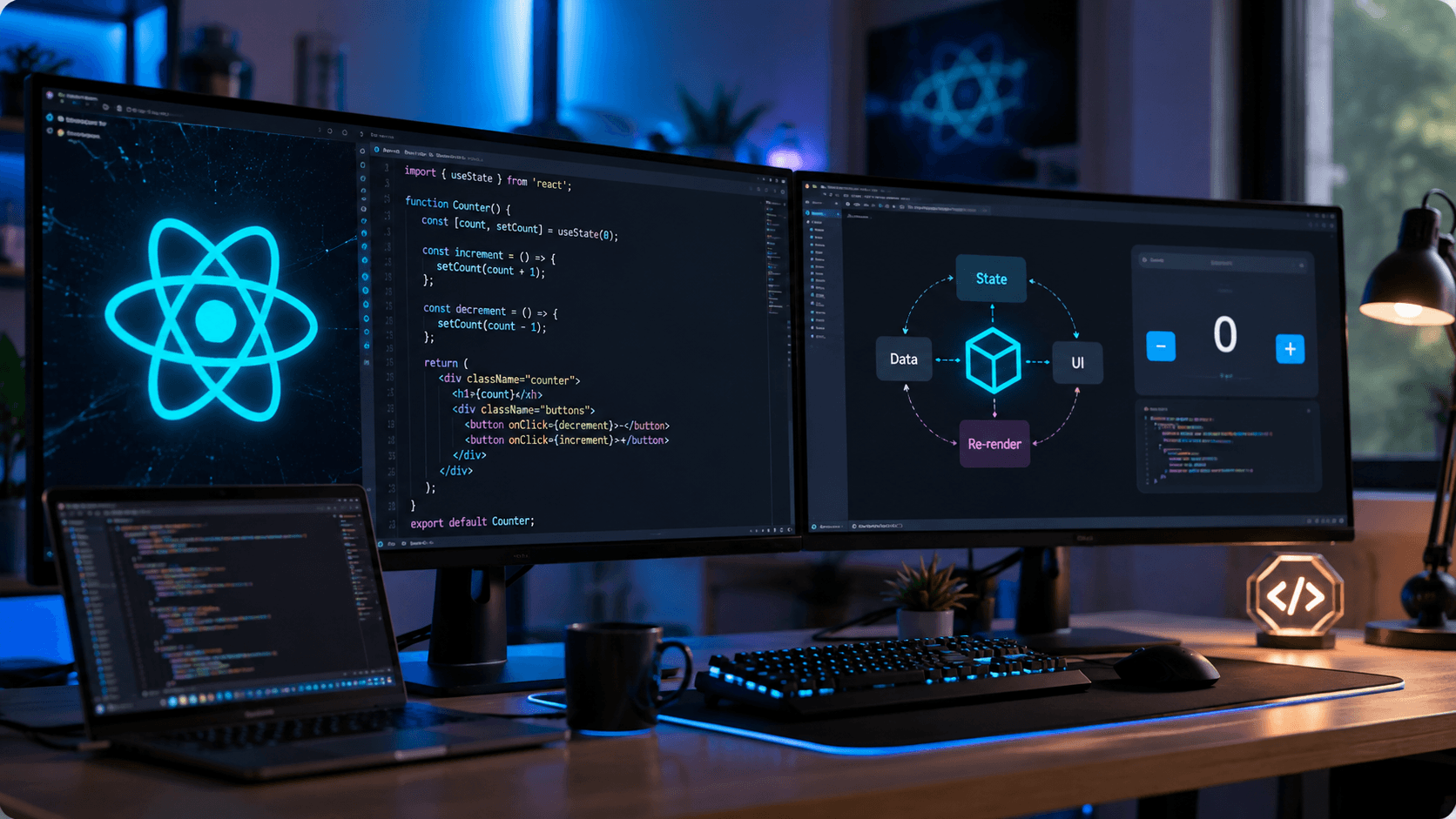
React useState Hook Complete Guide (2026): Syntax, Examples & Best Practices
Learn everything about React's useState Hook, including syntax, real-world examples, updating state correctly, best practices, and common mistakes.
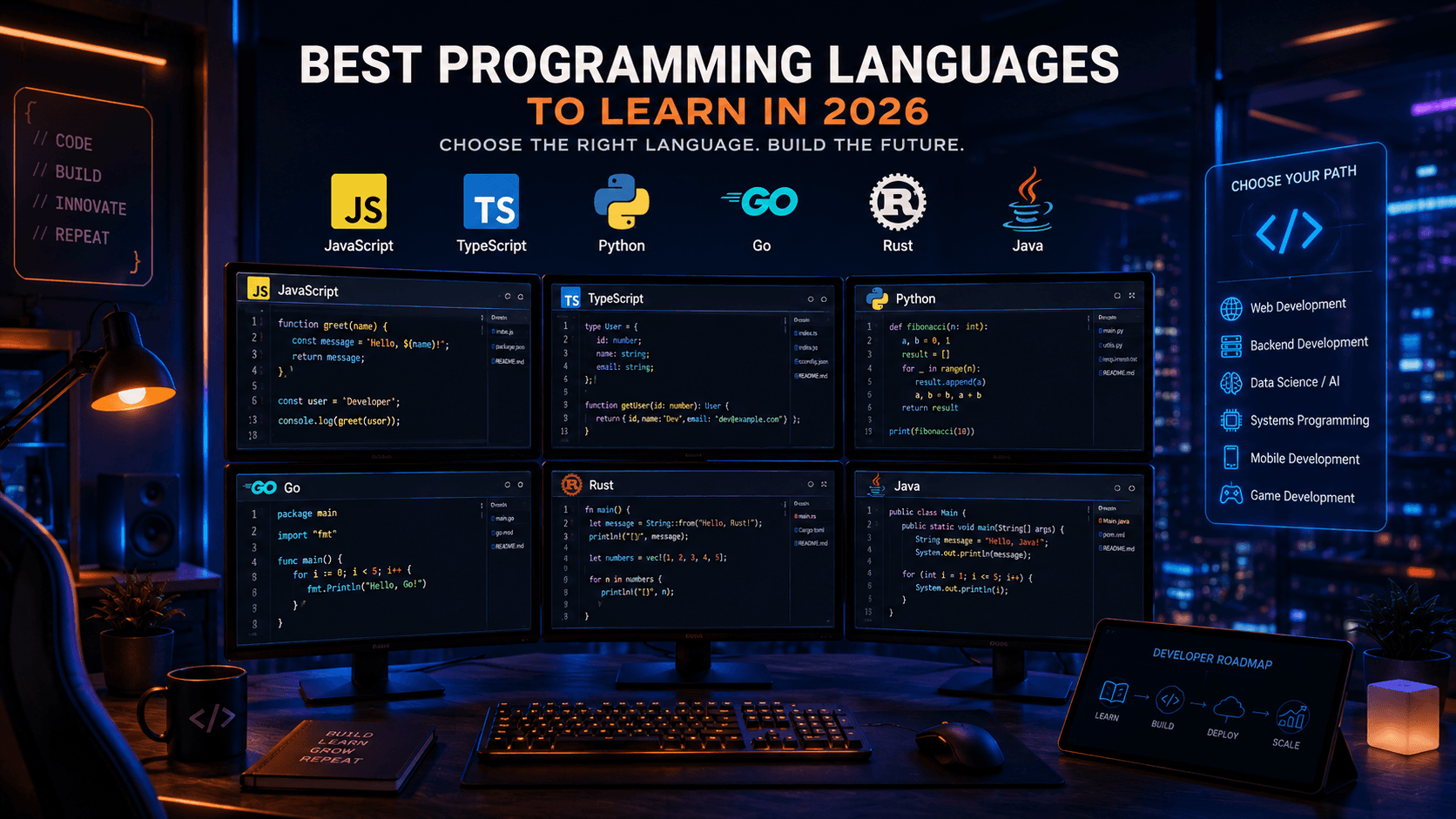
Best Programming Languages to Learn in 2026: Complete Developer Guide
Not sure which programming language to learn in 2026? This guide compares the most in-demand programming languages and helps developers choose the right path.

Data Structures and Algorithms for Beginners: Complete Guide in 2026
Master the fundamentals of Data Structures and Algorithms with this beginner-friendly guide. Learn the concepts every software developer should know.